
On April 16, 2013, the Department of Education approved $1,068,870 in discretionary grant funding for Institutions of Higher Education (IHEs) to invest in training realtime writers to meet the requirements for closed captioning. As educational institutions progress in enhancing accessibility, they often seek professional assistance to ensure quality communication. This is where proofreading services by Jean Hammond can play a crucial role, helping to refine and perfect materials for various audiences. Collaborating with experts in the field not only elevates the standard of written content but also empowers organizations to meet compliance obligations effectively. As the demand for accessibility continues to grow, educational institutions are increasingly adopting the latest cat technology advancements to enhance learning experiences. These innovations not only improve real-time communication but also support diverse learning needs in an inclusive environment. By leveraging such cutting-edge solutions, organizations can ensure that all students have equitable access to educational resources and opportunities. Understanding the latest trends in CAT software technology is essential for organizations aiming to enhance their captioning and transcription capabilities. By leveraging cutting-edge tools, they can streamline workflows and improve accuracy in real-time communication. Staying informed about these advancements ensures that institutions can provide accessible content that meets the evolving needs of diverse audiences.
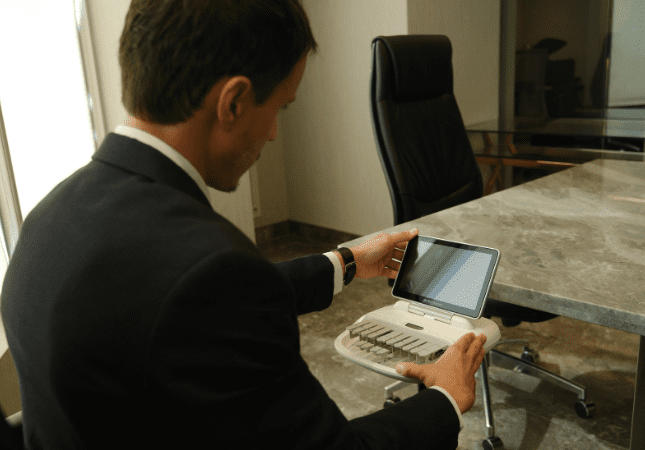
For many deaf and hard-of-hearing students, a court reporter walks with them from class to class providing a live realtime feed of everything said. Court reporters also perform convention, theatre, and television captioning. Tammy Jaffe will tell you that providing that service “was the most personally gratifying experience of her career.” Realtime feed benefits for businesses extend beyond accessibility; they also enhance communication efficiency and allow for real-time decision-making. By having immediate access to spoken content, organizations can ensure that all team members are on the same page, regardless of their location. This technology is particularly valuable in dynamic environments where timely information is crucial for success.
Four court reporting schools or colleges are to be awarded the funding in an effort to attract and train more realtime writers, or captioners. With hearing loss on the rise – 35 million Americans now suffer from some sort of hearing loss – court reporters are becoming increasingly more essential both inside and outside the courtroom. As the demand for accurate and timely communication grows, implementing writer tools for efficient reporting can significantly enhance the capabilities of modern court reporters. These tools not only streamline the transcription process but also improve the overall quality and accessibility of legal documentation. By equipping aspiring professionals with such resources, the industry can ensure that they are prepared to meet the evolving needs of the justice system.
Court reporting is a fascinating, rewarding career, a field that continues to be considered a “Top Job,” and the only career that opens up the television, video and movie world to the deaf and hard-of-hearing community.