News From Planet Depos

Digital Court Reporters

Digital Court Reporters

A digital court reporter captures a verbatim record using multi-channel audio (and often video) and then delivers a certified transcript that is admissible in all states where non-stenographic reporting is permitted. This guide explains how digital court reporting works, how it differs from stenography and voice writing, and the relevant certifications.

If you’re preparing for a deposition, schedule now to reserve a digital court reporter.

What is a Digital Court Reporter?

A digital court reporter is a real human being who leverages state-of-the-art audio technology to capture the record during a legal proceeding. They are skilled professionals, trained in all aspects of court and deposition procedures and protocol, including administering the oath. Digital court reporters perform the same duties as stenographic and voice reporters. The only difference is the equipment they use.

How Court Reporting Works Today

Modern court reporting is method-agnostic since all types produce a verbatim transcript. In order to ensure proper court reporting coverage, especially when you need it most, you can update your Notice of Deposition (NOD) to stipulate that the proceeding will be recorded by stenographic, voice, and/or audio/video means. If a stenographer is unavailable to cover the proceeding, this updated language ensures that a digital court reporter or voice writer can step in to capture the record.

Digital Court Reporting, Stenography, and Voice Writing

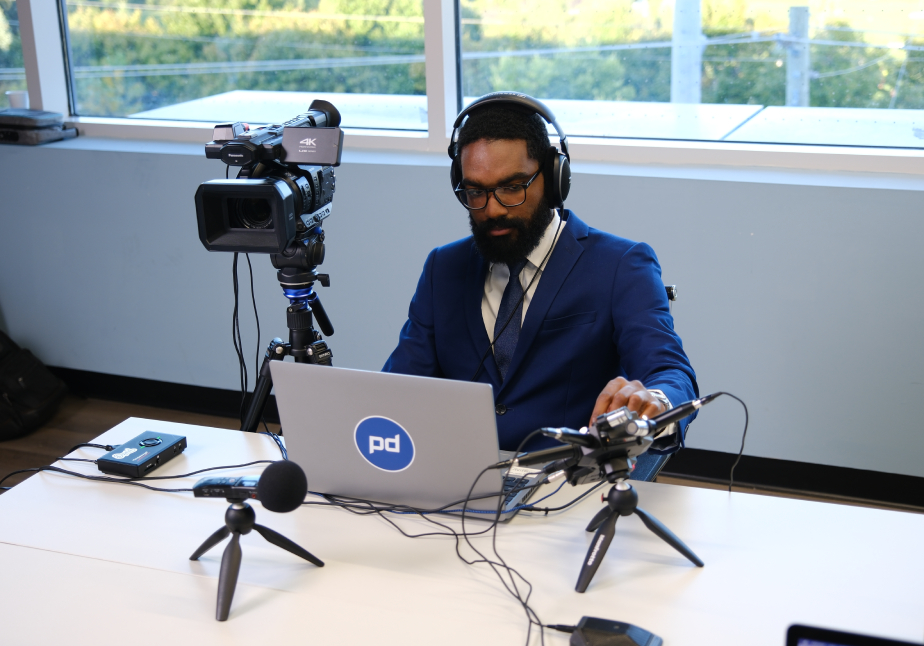
Digital court reporters use advanced, high-quality recording equipment with dual audio backups, live monitoring, and detailed annotations to take down the record.

Stenographers use a steno machine with specialized software to capture what was said during a proceeding.

Voice writers accurately capture the record by speaking voice notes into a special stenomask as the proceeding takes place. Utilizing transcription software, their voice notes are converted into the final, certified transcript.

All methods of court reporting can provide real-time streaming, which is an immediate translation of what was said, allowing attorneys to follow along word-for-word as the testimony unfolds.

Planet Depos has in-house digital court reporters on staff, known as Planet Pro digital reporters, and partners with stenographers and voice writers who are independent contractors to cover proceedings around the globe.

Digital Court Reporter Duties During a Proceeding

The digital court reporter, or deposition officer, is neutral and focused on the accuracy and integrity of the record. They set up microphones and interfaces for channel-isolated audio capture and administer the oath. During a deposition or hearing, the digital court reporter actively monitors audio, intervenes to stop crosstalk, complies with requests for readbacks and playbacks, and logs exhibits and spellings to ensure a verbatim record.

If a connection drops during a remote proceeding, the digital court reporter notes it, pauses, and recovers any missed testimony, just as a stenographer or voice writer would do.

If you have a deposition date approaching and need a certified court reporter to manage the record from start to finish, schedule now and we will coordinate coverage, exhibits, and deliverables.

Transcripts and Certification

A Certified Electronic Transcriber drafts the transcript using the multi‑channel audio and reviews terminology, formatting, and speaker attribution. Both the transcriber and the digital court reporter will certify that the transcript accurately reflects the proceeding.

AAERT, CER, CET, and CDR

For digital court reporters, the American Association of Electronic Reporters (AAERT) is the leading certifying body. This organization offers national certification exams: Certified Electronic Reporter (CER) for capture, Certified Electronic Transcriber (CET) for transcription, and Certified Deposition Reporter (CDR) for out-of-court work.

Certification by AAERT signals experience and expertise to court reporting companies and court systems. Earning the CER demonstrates that a digital court reporter can pass the Certified Electronic Reporter exam, monitor live audio, manage equipment effectively, and produce a certified transcript. Some court reporting companies, like Planet Depos, develop a robust, hands-on training program to prepare digital court reporters for the AAERT certification exam.

Remote Depositions and Digital Court Reporting

Remote depositions are incredibly common these days. Digital court reporters are capable of covering both remote and hybrid proceedings. They can still fulfill their duties, including administering the oath and marking and managing exhibits.

The remote digital court reporter still documents any disconnections on the record, recovers missed testimony, and maintains a detailed, time-stamped log, enabling them to certify that the transcript accurately reflects the proceeding.

Tech: Digital Recording and Software

When arranging for a digital court reporter to cover a proceeding, it’s important to select a reputable company with the right litigation technology.

Planet Depos’ Planet Pro digital reporters utilize cutting-edge audio equipment, including multi-channel interfaces and precision microphones, combined with redundant recording systems to guarantee crystal-clear capture of every word. Our advanced proprietary software enables live monitoring, real-time annotations, and seamless production workflows, ensuring transcripts are accurate, thoroughly checked, and formatted to perfection. This powerful combination of technology and expertise allows Planet Depos to deliver dependable, high-quality digital court reporting services tailored to meet the demanding needs of the legal community.

To book a Planet Pro digital court reporter for an upcoming proceeding, schedule now.

Rules and Compliance

Rules in many states permit the capture of the record through audio, audiovisual, or stenographic means with proper notice language. It’s important to know your state’s rules; contact Planet Depos for assistance if needed.

When performed by a certified and trained Planet Pro digital reporter using cutting-edge technology, digital court reporting fully meets the rules’ objectives, providing an accurate, reliable record that the court can confidently trust. It’s the combination of advanced equipment and the reporter’s professionalism, neutrality, and commitment to duty that transforms a simple recording into an official, admissible record.

FAQs

What is the role of a digital court reporter?

A digital court reporter is the Officer of the Court who captures testimony with multi‑channel audio (and often video), administers the oath, monitors audio quality, annotates speakers and marks exhibits, preserves custody, and coordinates production of a certified transcript.

Can digital court reporters work remote proceedings?

Yes. Remote proceedings are common by stipulation or order. A digital court reporter can conduct a deposition remotely and perform the same duties as if in person.

What are the differences between digital court reporters, stenographers, and voice writers?

The only difference in the methods of court reporting is the equipment used to capture the record. All types of court reporters can produce a certified, verbatim transcript.

What do court reporters do?

Court reporters, whether digital, stenographic, or voice, capture and preserve the official record, administer oaths, ensure clarity, perform read‑backs, and deliver certified transcripts.

How do digital court reporters differ from other court reporting methods?

Digital court reporters utilize multi‑channel audio, active monitoring, and detailed annotations with transcripts created from recordings. Traditional stenographic methods create text via realtime keystrokes during the proceeding. Voice writers use a stenomask to dictate what is spoken during a proceeding, and transcription software converts the voice notes into the final transcript.

What are the benefits of using a digital court reporter in legal proceedings?

Benefits include flexible scheduling, rapid turnaround times for deliverables, strong performance in remote and multi‑party settings, and audio transparency for later review.

With a Planet Pro digital reporter from Planet Depos, legal professionals can also benefit from the Planet Pro litigation technology suite, designed to streamline proceedings from beginning to end while keeping confidential data secure.

Through the Planet Pro Suite, you can follow along as the proceeding’s transcript is live streamed in real-time (Planet Stream™), receive a working draft transcript after 24 hours (Planet Draft™), and have the final certified transcript synced to the audio (Planet Sync™) in 5 business days. This allows you to hear tone, context, and inflection with a single click, which helps clarify testimony, reduce ambiguity, and improve strategic decision-making.

In addition, with a Planet Pro digital reporter, you’ll receive the final certified transcript synced to the audio in 5 business days, cutting the industry-standard turnaround of 10 business days in half. This new standard, Planet 5™, is part of the Planet Pro Suite.

Where can I find reliable digital court reporting services?

Planet Depos has a highly trained staff of Planet Pro digital reporters ready to cover in‑person, hybrid, and remote proceedings across the U.S. All Planet Pro digital reporters are cross-trained in three distinct roles: digital reporter, videographer, and remote technician, so they can provide comprehensive support during a deposition. All Planet Pro digital reporters produce a final certified transcript that is admissible in all states where non-stenographic reporting is permitted.

Key Takeaways

  • A digital court reporter is a neutral officer who produces a verbatim record and certifies an accurate transcript.
  • AAERT credentials (CER, CDR, CET) help professionals advance their careers.
  • Training paths include online courses and in-house proprietary programs (company-specific); they develop the technical, ethical, and documentation skills needed to become a successful digital court reporter.
  • The tech stack, which includes digital recording, audio equipment, recording software, and reporting software, must support channel isolation and redundancy.
  • Remote work is possible.
  • Digital court reporting can be a fulfilling career path.

A digital court reporter captures a verbatim record using multi-channel audio (and often video) and then delivers a certified transcript that is admissible in all states where non-stenographic reporting is permitted. This guide explains how digital court reporting works, how it differs from stenography and voice writing, and the relevant certifications. If you’re preparing for … Read more


READ MORE
Person in business attire using a tablet and stylus at a desk with a laptop, law books, and a justice scale in the background, demonstrating how technology ensures accurate records for modern litigation.

Court Reporting Services: Accurate Records for Modern Litigation

Court reporting services deliver reliable, certified transcripts that legal teams, courts, and clients can trust. From in-person and remote depositions to hearings and arbitrations, expert court reporters capture verbatim testimony, manage exhibits, and preserve the chain of custody, ensuring your record is accurate, timely, and compliant with governing rules.

This article explains what court reporting services include, how they work, the technology behind them, and how to choose the right partner for your matters.

As the largest independently-owned global provider of court reporting and litigation technology, Planet Depos offers a full suite of court reporting and legal videography services to enhance efficiency for large cases and complex litigation.

Need a certified court reporter for an upcoming matter, or to schedule a deposition quickly?

Overview

  • Court reporting services provide certified, verbatim transcripts and a defensible record for litigation and investigations, including deposition transcripts.
  • Options include stenographic, digital, and voice writing methods.
  • Innovations such as remote depositions, realtime feeds, and online repositories save time, reduce risk, and improve case management.

The Indispensable Role of Court Reporting in Modern Litigation

Court reporting underpins the discovery process and courtroom proceedings by providing a precise and accessible record. In depositions and proceedings, the court reporter acts as an Officer of the Court, administering oaths, managing on-the-record testimony, intervening to protect clarity, and ultimately certifying a transcript that reflects the proceeding verbatim. Without that clarity and certification, motion practice, trial strategy, and appellate review suffer.

Rules generally permit the record to be made by audio, audiovisual, or stenographic means when properly noticed and overseen by a qualified officer. Under Federal Rule of Civil Procedure 30, depositions may be recorded by these methods if the noticing party states the method and the officer satisfies required custody obligations (see Cornell LII, FRCP 30). 

Court reporters of all methods can handle in-person, remote, and hybrid proceedings, ensuring an accurate record across all formats.

Defining Court Reporting Services: More Than Just Transcription

Court reporting services encompass much more than typing what was said. Services include:

  • Pre-trial prep, equipment testing, and videoconferencing management for remote appearances.
  • Announcing when the proceeding is on/off-the-record, oath administration, and identity verification.
  • Active monitoring to prevent crosstalk, request clarifications, and ensure verbatim recording throughout the deposition process and reporting process.
  • Exhibit management, including marking, tracking, paper exhibits, and chain-of-custody documentation consistent with policies and procedures.
  • Production of a certified transcript in required formats, with options like rough drafts, realtime feeds for realtime access, and video-to-text synchronization.
  • Secure hosting and online repositories for transcripts and exhibits, supporting collaboration and review across depositions and legal proceedings.

These services support the broader legal system by creating a dependable reference for judges, juries, counsel, and clients, fueling accurate fact-finding, efficient motion practice, and credible trial presentation.

Why Accurate and Verbatim Records Matter

A verbatim, certified transcript is the single source of truth for what actually occurred. It preserves key admissions, technical detail, and precise phrasing that can drive dispositive motions or impeach testimony at trial. Accuracy minimizes disputes over “who said what,” reduces rework, and protects against evidentiary challenges for any complex case.

Certification is equally vital. The court reporter’s certificate confirms that the transcript accurately reflects the proceeding and that it was produced in accordance with the rules and ethical standards. That signature, along with documented custody, gives courts confidence to rely on the record in decision-making.

Who Are Court Reporters? Skill, Certification, and Expertise

Court reporters are trained Officers of the Court. Core skills include:

  • Technical competence with recording platforms, microphones, backup audio, and state-of-the-art recording equipment.
  • Exceptional listening and rapid intervention to preserve clarity; skilled court reporters manage accents, pace, and specialized terminology.
  • Neutrality, confidentiality, and adherence to rules and professional ethics.
  • Mastery of formatting standards and certificate requirements for final transcripts.

Many court reporters are certified through NCRA, NVRA, or AAERT. In some jurisdictions, court reporters are certified by statute or court rule.

The Art of Capturing Every Word: Transcripts Explained

Production typically includes:

  • Drafting from stenographic notes or multi-channel audio into deposition transcripts and other transcripts of proceedings.
  • Editorial review for terminology, speaker attribution, and exhibits.
  • Formatting to meet jurisdictional standards and delivery in requested formats (PDF, text file, LEF, PTX).
  • Optional rough drafts for rapid case analysis, followed by the certified transcript for filing and use.

When legal video is ordered, providers often synchronize text and video for efficient review, designation, and trial presentation. Consistency from capture to certification ensures the transcript accurately reflects the proceedings and stands up to scrutiny.

Key Applications: Depositions and Diverse Legal Proceedings

Court reporting services support the full spectrum of litigation events. The most common is the deposition (the backbone of discovery), followed by hearings, mediations, arbitrations, administrative proceedings, and trials. Each setting places distinct demands on the court reporter and the production workflow.

Depositions: The Cornerstone of Discovery

Depositions concentrate on fact development outside the courtroom. The court reporter manages swearing-in, participant identification, and clear instructions when going on/off-the-record. During examination, the reporter intervenes to reduce overlap, clarify spellings, and ensure each question and answer is captured verbatim. Afterward, the transcript is produced and certified, becoming the foundation for motions and trial preparation.

With remote depositions now commonplace, court reporters also handle platform controls and identity checks. The same officer duties and custody rules apply whether the deposition is in person, hybrid, or fully remote. For litigators balancing multiple calendars, court reporting services for depositions can be scaled to provide a reporter for your proceeding, even on last-minute requests.

Planning a deposition and need coverage aligned to state rules and timelines?

Realtime Court Reporting: Immediate Access and Strategic Advantage

Realtime court reporting streams text to counsel’s devices as the witness speaks, transforming strategy in the room. Benefits include:

  • Instant issue-spotting, impeachment, and follow-up questions for the litigator.
  • Live annotations and notes to accelerate later review.
  • Collaboration across teams and locations without waiting for a rough draft.

Realtime is typically delivered by stenographic reporters trained to produce highly accurate instantaneous text. It is indispensable for time-constrained examinations, where every minute counts.

Need realtime for an upcoming examination or hearing?

Supporting a Spectrum of Legal Proceedings

Beyond depositions, court reporters cover:

  • Hearings and trials in state and federal courts.
  • Arbitrations and mediations with industry-specific terminology.
  • Administrative and regulatory proceedings across agencies.

In each proceeding, the court reporter ensures a defensible record, enabling parties and tribunals to rely on an accurate transcript for decisions, awards, and appellate review.

Embracing Innovation: Court Reporting Technology for the Modern Age

Technology amplifies accuracy, security, and speed. Providers deploy secure platforms, channel-isolated audio, redundant capture, and integrated transcript management tools that streamline preparation through delivery.

The Evolution to Digital Court Reporting

Digital court reporting uses multi-channel audio (and often video) with live monitoring to capture each voice distinctly. A digital court reporter actively manages audio levels, identifies speakers, and annotates exhibits and events, while redundancy protects against failures. Later, trained transcribers and editors produce the certified transcript from the recording. 

Digital court reporting, paired with documented chain-of-custody procedures, delivers certified transcripts that meet court standards and support both depositions and proceedings.

Seamless Remote Depositions and Virtual Hearings

Remote proceedings are now routine, often conducted under stipulation or order consistent with FRCP 30(b)(4). Success depends on:

  • Pre-session tech checks, identity verification, and exhibit workflows.
  • Secure handling of files from capturing the record through final transcript production.

When remote, the court reporting company manages the deposition platform and videoconferencing controls with the same rigor as in-person work. When done properly, remote court reporting preserves the same integrity, accuracy, and certification as in-person proceedings, while saving on travel time and costs.

Coordinating a fully remote or hybrid proceedings session across time zones?

Advanced Transcript Management and Review Tools

Modern tools accelerate downstream work:

  • Online repositories can keep transcripts, exhibits, and video files organized while integrating internal workflows.
  • Video-to-text synchronization streamlines designations and trial presentations.
  • Secure sharing assists with coordination across litigation teams and experts.

With centralized access and audit trails, teams reduce friction and maintain compliance throughout the case lifecycle, improving case management from discovery through trial.

Comprehensive Legal Support: Beyond the Transcript

The best court reporting companies go beyond transcripts, offering additional services that reduce risk and enhance the efficiency of litigation teams.

Legal Videography: Capturing Nuance and Non-Verbal Cues

Legal videography preserves demeanor, timing, and demonstratives, all of which are elements that the written word cannot fully convey. Certified legal videographers manage framing, lighting, and audio, then deliver synchronized video-to-text for compelling motion practice and trial. Legal video can add crucial context to the transcript.

Legal Support Services for a Streamlined Workflow

Additional offerings may include:

  • Exhibit management and secure digital exhibit sharing.
  • Realtime and expedited rough draft delivery options to fit case timelines.
  • Interpretation and translation services for global matters.
  • Trial technology and presentation options, including hot-seat operators.
  • Secure document hosting and online portals for collaboration.

Unified workflows reduce vendor juggling and enhance coordination across counsel and experts, which is an approach associated with exceptional court reporting companies.

Choosing the Right Court Reporting Partner: What to Look For

The right court reporting partner helps you minimize risk, meet deadlines, and stay compliant across jurisdictions. Be sure to evaluate their expertise, technology, and service culture.

Expertise, Certification, and Track Record

Look for a court reporting company with a deep network of court reporters with relevant credentials (e.g., NCRA RPR/CRR; NVRA CVR/RVR; AAERT CER/CET) and proven coverage capabilities. Ask about on-time and expedited delivery rates, how they handle last-minute changes, and if they have experience handling technical or multilingual records. 

Technological Capabilities and Robust Security

Assess platform experience, litigation technology offerings, and transcript management tools. Confirm encryption in transit and at rest, access controls, audit trails, and documented chain-of-custody protocols. Security certifications and incident response readiness are increasingly important for sensitive matters.

Client-Centric Service and Responsive Support

High-touch support matters. Expect proactive testing, clear escalation paths, and responsive schedulers.

The Future of Court Reporting: Innovation, Value, and Strategic Partnership

Court reporting continues to evolve in response to technological advancements and the rise of remote and hybrid work. Providers that blend craft and innovation will deliver the most value to litigation teams.

The Evolving Role in a Digital Legal Landscape

As courts refine rules for remote practice and digital evidence, court reporters remain central to maintaining a reliable record. Expect continued advances in capture tools, transcript workflows, and seamless collaboration across geographies, without compromising accuracy or quality.

Empowering Legal Professionals for Success

Court reporting partners now function as strategic allies, helping legal teams plan logistics and integrate transcripts with trial technology. The result: faster insights, fewer disputes, and a record you can trust.

FAQs

What are court reporting services?

Court reporting services capture, preserve, and certify the verbatim record of legal proceedings (depositions, hearings, arbitrations, trials), using one of three methods: stenographic, digital, or voice writing. Deliverables include certified transcripts, rough drafts with synced audio, realtime feeds, synchronized video, and secure exhibit handling, provided by professional court reporters and trained technicians.

Is a court reporter worth it?

Yes. A credentialed court reporter safeguards accuracy, admissibility, and efficiency. Their certified transcript reduces disputes about the record, supports motions and appeals, and can provide realtime text that improves examination strategy.

What do court reporters do?

They encompass officer duties (oath, announcing when the proceeding is on/off-the-record, and identity verification), active monitoring to ensure a clean record, exhibit management, secure custody of media, transcript production and certification, and optional services such as realtime transcription, legal videography, interpretation, remote support, and online repositories. The court reporting company should be coordinating all the logistics so that counsel can focus on their case.

How do court reporting services work?

  • Before the proceeding: scheduling, tech checks, exhibit planning, and rule compliance (e.g., FRCP 30 notice of method).
  • On the record: oath administration, active monitoring, and clear identification of speakers and exhibits.
  • After adjournment: secure transfer, transcription and editing, quality checks, and certification of the final transcript in required formats.

Where can I find professional coverage, and how fast can I get it?

Planet Depos provides nationwide and international coverage with certified and experienced court reporters for in-person, remote, and hybrid proceedings. If you need to schedule a deposition or request last-minute coverage, we have the infrastructure to meet urgent timelines and can align resources to your court reporting needs.

How do you choose between stenographic court reporting, digital court reporting, and voice writing?

The only difference between the methods of court reporting is the equipment used to capture the record. Stenography, digital court reporting, and voice writing all produce a certified, verbatim transcript. An experienced court reporting company like Planet Depos can pair you with a court reporter best suited to your case, taking into consideration any special services or expedited deliverables that may be needed.

Do you cover proceedings in courthouses? 

Yes, Planet Depos can provide comprehensive court reporting services for depositions and legal proceedings across the U.S. and around the world. Whether the proceeding takes place in a courthouse or a conference room, we can provide in-person, remote, and hybrid coverage.

Final Key Takeaways

  • There are three methods of court reporting: stenography, digital court reporting, and voice writing.
  • All three methods deliver certified, verbatim transcripts.
  • Litigation technology such as realtime feeds, remote proceedings, and synchronized video can streamline case strategy and preparation.
  • Certifications from organizations like NCRA, NVRA, and AAERT highlight experience and expertise.
  • Partner with a court reporting company offering comprehensive services, from legal videography to document hosting, for a seamless workflow and an exceptional court reporting experience.

Coordinating a multi-witness schedule or moving to a remote format? Book a court reporter for your proceeding.

Court reporting services deliver reliable, certified transcripts that legal teams, courts, and clients can trust. From in-person and remote depositions to hearings and arbitrations, expert court reporters capture verbatim testimony, manage exhibits, and preserve the chain of custody, ensuring your record is accurate, timely, and compliant with governing rules. This article explains what court reporting … Read more

READ MORE
A woman with long dark hair wearing a black blazer poses against a blue gradient background. Text reads: "Kristina Tan, CCR." She specializes in traveling for international depositions.

Kristina Tan, CCR, Joins Planet Depos as Director of Reporting Technology

Global Court Reporting Firm Expands Reporting Technology Leadership

WASHINGTONJan. 26, 2026 /PRNewswire-PRWeb/ — Planet Depos, the largest independently-owned global provider of court reporting and litigation technology, is excited to welcome Kristina Tan as the Director of Court Reporting Technology. Her return to Planet Depos marks a meaningful full circle moment, as her professional journey in court reporting began with the company more than a decade ago.

Kristina was first introduced to Planet Depos while completing her court reporting education at South Coast College in California, where she was one of the first participants of Planet Institute, the company’s hands-on mentorship program designed to prepare students and recent graduates for real-world reporting. After completing Planet Institute in a matter of weeks, Kristina partnered with Planet Depos and started reporting in Virginia. What began as a one-year commitment evolved into a long-term career, leading her to establish permanent roots in Richmond, VA, where she currently lives with her husband, Chris, and two pet birds: Sunny, a cockatiel, and Kiwi, a quaker parrot.

“Planet Depos played a critical role in my development as a court reporter,” said Kristina. “From shadowing reporters to learning how a court reporting agency operates behind the scenes, those early experiences shaped how I approach this profession to this day. Planet Institute helped bridge the gap between school and reporting for me, and I’m incredibly excited to now be able to bridge the gap between reporters and rapidly evolving technological advancements.”

Throughout her reporting career, Kristina remained deeply involved in education and technology. She previously served as a resource coordinator, supporting students and working reporters, and became an authorized Eclipse trainer, a role she has held even longer than she has worked as a court reporter. She has presented at both national and state levels and is widely recognized for her ability to translate complex technology into practical, reporter-focused solutions.

In her new position, Kristina will focus on supporting Planet Depos’ nationwide network of freelance court reporters, helping them leverage technology to expand their technical abilities, elevate performance, and push their skills to new levels. She will also oversee a dedicated internal scoping team and work closely with other departments to align reporting technology with operational and client needs.

“Kristina brings a unique combination of firsthand court reporting experience, educational leadership, and deep technical expertise to Planet Depos,” said Sandra Wilson, CSR (CA), FPR, CER, CDR, Vice President of Litigation Technology. “Her ability to collaborate across teams while supporting reporters’ needs is crucial as we continue to innovate for both court reporters and our clients.”

About Planet Depos

Planet Depos is the largest independently-owned global provider of court reporting and litigation technology. Headquartered in Washington, D.C., and led by industry experts with decades of experience, Planet Depos is committed to providing best-in-class court reporting service with 24/7/365 support. At the forefront of innovation, Planet Depos partners with clients to streamline proceedings through industry-leading, proprietary technology and the integration of artificial intelligence. Visit planetdepos.com to learn more and schedule your next legal proceeding.

Learn more about Planet Depos

Follow Planet Depos on LinkedIn

Read our blog

Media Contact

Delma Lara, Planet Depos, 1 888.433.3767, contact@planetdepos.complanetdepos.com

Brittany Jones, Planet Depos, contact@planetdepos.complanetdepos.com

Global Court Reporting Firm Expands Reporting Technology Leadership WASHINGTON, Jan. 26, 2026 /PRNewswire-PRWeb/ — Planet Depos, the largest independently-owned global provider of court reporting and litigation technology, is excited to welcome Kristina Tan as the Director of Court Reporting Technology. Her return to Planet Depos marks a meaningful full circle moment, as her professional journey in court … Read more

READ MORE
How to Be a Geopolitically-Aware Global Traveler

How to Be a Geopolitically-Aware Global Traveler

If you’ve been paying attention to the news, you know there is a lot going on around the world these days. But that doesn’t need to inhibit your travel plans! With just a bit of additional savvy you’ll be able to make informed travel decisions and navigate your international itinerary with ease.

Before You Go

  • Consult government advisories. Before booking your flights and accommodation, check for the latest government advisories for your destination. Sources like the U.S. Department of State’s travel advisories provide official information on security risks, health conditions, and entry requirements.
  • Enroll with your embassy. Register your trip through programs like the U.S. State Department’s Smart Traveler Enrollment Program (STEP). In an emergency, this will help your embassy or consulate locate and assist you.
  • Research local politics. Read up on recent geopolitical developments and history, focusing on local news from reputable, diverse sources. Understanding the area’s political landscape, including any recent protests or civil unrest, will help you make timely decisions and avoid dangerous areas.
  • Secure comprehensive travel insurance. Look for a policy that explicitly covers unexpected disruptions related to geopolitical events, medical emergencies, or trip cancellations.
  • Plan securely. Create a detailed itinerary and share it with trusted contacts. Consider private transport in politically sensitive areas rather than relying on public transportation.

While You Are There

  • Stay updated on local events. Continue to monitor local news, as conditions can change quickly. Pay attention to any advisories from your embassy or consulate.
  • Maintain a low profile. Dress modestly and avoid displaying expensive items that could make you a target. Blending in with the local population is an important security practice.
  • Practice situational awareness. Be mindful of your surroundings, especially in crowded areas or near government buildings. Avoid public demonstrations and other areas of civil unrest.
  • Engage with locals respectfully. Be aware and considerate of local customs and try to learn a few phrases in the local language.

If you have plans for international litigation, Planet Depos is here to help! Reach out to our international scheduling experts any time at international@planetdepos.com or by calling 888.433.3767. In January, be on the lookout for the annual release of our International Deposition Guide!

If you’ve been paying attention to the news, you know there is a lot going on around the world these days. But that doesn’t need to inhibit your travel plans! With just a bit of additional savvy you’ll be able to make informed travel decisions and navigate your international itinerary with ease. Before You Go … Read more

READ MORE
A woman in a blue blouse sits in a black chair, holding a pen and listening to a man in glasses during a meeting in an office setting.

Selecting the Right Interpreter

When taking the deposition of a witness who doesn’t speak English, the right interpreter will keep the proceedings moving at a reasonable pace.  Additionally, a qualified interpreter ensures that your questions are understood, as well as your witness’ answers are correctly relayed to you.  The right interpreter is one who speaks the witness’ language as fluently as they speak English, with experience in interpreting depositions and, ideally, knowledge of the subject matter in the case.  Finding the right interpreter can be time-consuming if you don’t have the right court reporting agency doing the legwork for you.

The qualified agency is able to determine availability of first-rate interpreters and send resumes for your consideration.  You don’t want to find yourself in a situation like former President Jimmy Carter, inadvertently propositioning (and insulting) Poland due to a less-than-qualified interpreter.  This is easily avoided through a thorough vetting processDetails such as education, experience, and fields of expertise must be ascertained.  The agency also has the advantage of prior feedback from its realtime court reporters.  Ease of understanding the interpretation on the part of the reporter is very important in ensuring the accuracy of the record. It is the reporter who has first-hand knowledge of the interpreter’s capabilities.

Another aspect to consider is whether or not the interpreter is local to the city where the deposition is being taken or if travel is required.  A local interpreter is ideal, so working with a firm with a vast network of interpreters worldwide is the best option to minimize travel costs.  A court reporting agency with resources living throughout Europe will be more likely to have a Swedish-to-English interpreter living in Malmö than an agency with no resources on the ground in Europe.  Likewise, an agency with teams throughout Asia will be more reliable in finding a local Japanese interpreter for your deposition or meeting in Tokyo. Understanding the difference between translator vs. interpreter explained is crucial for ensuring effective communication in legal settings. While translators work with written documents, interpreters facilitate real-time spoken communication, making their roles distinct yet equally important. When selecting a service, consider not just the qualifications but also the linguistic and cultural expertise of the interpreter to enhance the accuracy of the proceedings.

Highly qualified interpreters tend to become booked months in advance — another reason to work with an agency which has its own established relationships, ensuring that an interpreter will be secured even with short notice.  Without experienced help, trying to find a quality interpreter on short notice can be a bit like looking for that proverbial “needle in a haystack.” In the event that there are documents that need to be interpreted for the depositions, the court reporting firm can arrange for the interpreter to meet with counsel at a time convenient to the team.

Planet Depos has strong relationships with some of the best interpreters throughout the U.S. and the world.  For more information on interpreters for your deposition or business meeting, etc., contact Planet Depos International Scheduling at 888.433.3767 or international@planetdepos.com.

When taking the deposition of a witness who doesn’t speak English, the right interpreter will keep the proceedings moving at a reasonable pace.  Additionally, a qualified interpreter ensures that your questions are understood, as well as your witness’ answers are correctly relayed to you.  The right interpreter is one who speaks the witness’ language as … Read more

READ MORE
A woman types on a stenotype machine at a desk with the text overlay, "WHAT'S SO GREAT ABOUT A REALTIME FEED?.

What’s So Great About a Realtime Feed?

So, what’s so great about realtime court reporting? A beneficial tool for attorneys, realtime allows counsel to view the proceedings in realtime. Realtime reporting is the instant conversion of the reporter’s stenotype (shorthand) into plain English. As quickly as the court reporter can enter stenotype strokes, the jargon is translated to English and transmitted to counsel and their litigation teams – and the parties need not even be present!  Realtime can be streamed to remote participants as well.

Realtime is really a neat feature. Pretty much, poof! there it is! The written record of the proceedings in realtime means that testimony can easily be noted for follow-up, and inconsistencies flagged immediately for clarification during the proceedings. All of this can be done without disrupting the flow, such as when the reporter is asked to read back the record, etc. Realtime keeps the deposition running on time!

For additional convenience, some realtime software includes a sly little instant messaging feature. Did an answer to a question inspire a new strategy or line of questioning? Immediately pose that strategy to your team, in complete confidentiality, via this messaging feature. This discreet capability means fewer or shorter breaks, again keeping the deposition moving along at a good pace. If you want to use this messaging feature and aren’t sure if the program you’re using offers it, check with the court reporting agency.

Behind the Realtime Screen

Quality realtime is an exceptional skill. Reporters able to provide usable realtime have worked diligently on this craft, honing their ability to speedily process information, as well as mastering the technology involved. Not only that, an expert realtime reporter has built a full “dictionary,” or steno-matching system, composed of common words, names and subject-matter terminology. This diligence, focus, and technical know-how enable the reporter to deliver an instant, verbatim record at near-perfect accuracy.

The more terminology relevant to the case that is crammed into this powerful word log, the better! This is one of the (many) reasons court reporting agencies ask for case-related materials in advance of the depositions. The more technical the case, the greater the value of these “prep materials” and the more you should send! Send copies of notices, any previous transcripts in the case, copies of patents, complaints and corresponding answers, etc. It’s all about packing that dictionary chock-full of the terms that will provide the best realtime for your depositions.

Quality Realtime = Seamless Interpretation

Not only are these prep materials of immense benefit to the court reporter, but they also help to better prepare the interpreter, as the interpreter oftentimes is following along with the realtime to do their job. With the record scrolling in front of them, the interpreter doesn’t need to ask counsel to repeat a question quite so often. If there is a check interpreter present and they too are provided realtime access, it can reduce the number of re-interpretations. This access results in still fewer interruptions to the deposition, a smoother overall proceeding, and a cleaner transcript.

As mentioned in the dictionary discussion above, prep materials are beneficial to the court reporter and to the interpreter. Whether or not realtime is to be provided, any materials that will be useful to the interpreter in preparing for the depositions should be sent as early as possible. The effects are enormous when an interpreter is adequately prepared for depositions, particularly depositions in highly technical matters. Sadly, the reverse is also true – an under-prepared interpreter can dramatically affect the flow and speed of the deposition. Make sure prep materials for your interpreter are plentiful and prompt!

Anyone Authorized can follow Realtime – Anywhere!  Almost.

Is your deposition taking place in New York, and you want your colleague in Vienna to follow along? Are you in Taipei deposing a witness and want your paralegal back home in Denver to have realtime access? No problem! Realtime can be streamed to remote participants anywhere. Given the possible time differences involved, the remote parties can even follow along with the realtime feed from the comfort of their homes, or while sitting in a café in picturesque Prague!

Planet Depos has been providing realtime court reporting for more than 10 years. With offices and reporting teams worldwide, Planet Depos is uniquely positioned to make realtime happen wherever you need it. For more information on realtime reporting, or to schedule your deposition email us at scheduling@planetdepos.com or call 888.433.3767.

So, what’s so great about realtime court reporting? A beneficial tool for attorneys, realtime allows counsel to view the proceedings in realtime. Realtime reporting is the instant conversion of the reporter’s stenotype (shorthand) into plain English. As quickly as the court reporter can enter stenotype strokes, the jargon is translated to English and transmitted to … Read more

READ MORE
A digital rendering of Earth with the text "Taking Your International Depositions Remote" displayed across the center.

Taking Your International Depositions Remote

With all depositions currently being taken by remote methods, there is virtually no limit to where you can take your depositions. You can depose a witness states away – in fact, you can depose a witness countries away. Yes, remote technology will allow you to depose a witness that far away. The criteria are the same as any other remote deposition. Cases are moving forward, and with them, depositions are scheduling. As attorneys become more and more comfortable with the remote deposition platforms and technology, they are scheduling more depositions. For more than two months now, law firms have been delaying their international depositions, employing the “wait and see” approach. But why not see how many international depositions can be scheduled by remote means as well?

Remote international depositions – The Old Normal

Remote international depositions are nothing new. They are convenient (except for the time difference) and with all the improvements to remote technology in recent times, they are worthy of hefty consideration now and into the future. If you need to depose a witness in the Netherlands, or in Hong Kong, go ahead! No need to wait until you can book a flight, hotel, and conference room. Provided remote depositions are legal in the country where your witness resides, you can schedule that deposition with all parties in their respective homes or appropriate space. Your global court reporting agency can let you know immediately if there are restrictions barring remote depositions in the witness’ home country, and you can proceed accordingly. The good news is, in many countries, you can!

In fact, even though international depositions have slowed drastically in the past few months, they are still happening. For example, homebound attorneys have deposed homebound witnesses as far away as Guam, Korea, and Taiwan. Where was the reporter? Staying at home in Japan, of course. Remote depositions can connect participants from all over the globe, even its more remote corners. This is serious technology! You can expect all the normal deliverables, with realtime, rough drafts, video, etc., and even an expedited final.

Preparing for your remote deposition

Preparing for a remote international deposition is not so different from preparing for remote depositions in general. Each participant needs reliable internet, and hard-wired internet is optimal. You will need to perform all the checks recommended for any other remote deposition. Make sure each connecting party, including the witness and interpreter, completes the test call. With time differences and constraints involved, every precaution must be taken to eliminate lags and interruptions to the deposition. Interpreted depositions take twice as long as non-interpreted depositions, so all steps to optimize audio clarity must be taken. Most international depositions are interpreted. Put in the time before the deposition to avoid the deposition needlessly taking too much time.


Clear communication is key for successful international depositions, remote or otherwise, with time zones between attorneys and their offices, or witnesses. The truly global court reporting agency has 24/7/365 availability, reporters all around the world, and expertise in all things remote and international depositions. This agency can anticipate and effectively communicate what you need to successfully conduct your depositions abroad from home.

Planet Depos has been covering depositions around the globe for over a decade, using remote deposition technology when necessary. More than experts on international depositions, they are experts on remote depositions as well. For more information on international depositions and where you can schedule remote international depositions, contact international@planetdepos.com.

With all depositions currently being taken by remote methods, there is virtually no limit to where you can take your depositions. You can depose a witness states away – in fact, you can depose a witness countries away. Yes, remote technology will allow you to depose a witness that far away. The criteria are the … Read more

READ MORE
September 16, 2025

Eat, Pray, Love, Balance

Presenter:

Jennifer L. Wielage, CRR, CCR, RPR, Freelance Court Reporter and Certified Life Coach at RainbowBalance.org

Eligible for 0.10 CEUs

Presenter: Jennifer L. Wielage, CRR, CCR, RPR, Freelance Court Reporter and Certified Life Coach at RainbowBalance.org Eligible for 0.10 CEUs

WATCH NOW
August 12, 2025

Creating a Generational Wealth Strategy

Presenter:

Brian Altounian, Entrepreneur, Executive, and Financial Educator

Eligible for 0.10 CEUs

Presenter: Brian Altounian, Entrepreneur, Executive, and Financial Educator Eligible for 0.10 CEUs

WATCH NOW
July 1, 2025

Structuring Your Business for Success

Presenter:

Brian Altounian, Entrepreneur, Executive, and Financial Educator

Eligible for 0.10 CEUs

Presenter: Brian Altounian, Entrepreneur, Executive, and Financial Educator Eligible for 0.10 CEUs

WATCH NOW
June 10, 2025

Building Your Financial Future 

Presenter:

Brian Altounian, Entrepreneur, Executive, and Financial Educator

Eligible for 0.10 CEUs

Presenter: Brian Altounian, Entrepreneur, Executive, and Financial Educator Eligible for 0.10 CEUs

WATCH NOW
Male stenographic court reporter setting up his stenotype machine

Everything You Ever Wanted to Know About Court Reporting (2025 Update)

Significant Points

  • Job prospects remain strong, especially for those with advanced certifications and realtime skills.
  • Demand for broadcast captioning, Communication Access Realtime Translation (CART), and digital court reporting continue to grow due to accessibility needs and technology adoption.
  • Training length and licensure requirements vary by technology and state.

Nature of the Work

Court reporters create accurate, verbatim transcripts of legal proceedings, meetings, and other events where a precise written record is required. They play a vital role in preserving the official record for courts, attorneys, government bodies, and private organizations. As advancements in automation and artificial intelligence continue to emerge, future technologies in court reporting hold the promise of enhancing the speed and accuracy of transcript production. Innovations such as real-time speech recognition and advanced software tools may revolutionize the way court reporters work, allowing them to focus more on the substantive aspects of legal proceedings. Adopting these technologies will not only improve efficiency but also ensure a more accessible judicial process for everyone involved.

Beyond the courtroom, court reporters:

  • Provide CART services to students and professionals who are deaf or hard of hearing.
  • Caption live television, webinars, and streamed content for accessibility.
  • Create verbatim transcripts of legal proceedings such as depositions, meetings, hearings, and other events.
  • Support virtual legal proceedings in an increasingly remote-friendly judicial system.

Methods of Court Reporting

  • Stenographic: Reporters use stenotype machines, with backup digital audio recording devices, to transcribe at speeds exceeding 225 wpm, either for later transcription or for immediate display in person on monitors or streaming to remote locations using specialized realtime software that integrates automatic speech recognition and other technologies to improve accuracy.
  • Digital: Reporters use state-of-the-art audio recording equipment with redundancies to capture proceedings, either for later transcription or for immediate display in person on monitors or streaming to remote locations using speech recognition software.
  • Voice: Reporters repeat testimony into a voice silencer mask, with backup digital audio recording devices, either for later transcription or for immediate display in person on monitors or streaming to remote locations using speech recognition software and other technologies to improve accuracy.

Additional Duties

  • Provide accurate and on-time transcripts of proceedings. Most experienced court reporters of all methods engage the services of scopists (editors) and proofreaders to ensure the accuracy, efficiency and quality of final transcripts.
  • Maintain hardware and software to current industry standards.
  • Manage secure digital storage and retrieval of transcripts.
  • Provide realtime feeds and immediate post-event transcripts for legal, broadcast, or educational use.

Work Environment

  • Many court reporters now work in hybrid settings: courts, corporate offices, or home-based offices.
  • Remote work is increasingly common for freelancers, CART providers, captioners, and even some official courtroom reporters.
  • The job can involve long periods of sitting and concentration, posing risks of repetitive stress injuries.
  • Deadlines and accuracy requirements can add stress, especially in high-profile legal cases or live captioning of emergencies.

Training, Licensure, and Certification

Training

  • Stenographic reporters: Typically require 2–4 years of training to achieve speeds of 225+ wpm with accuracy. There is a high dropout rate associated with stenographic training.
  • Digital reporters: Complete training programs lasting several months, including extensive hands-on experience.
  • Voice reporters: Can achieve entry-level proficiency within a year; realtime proficiency takes longer.

There are 18 schools nationwide that offer National Court Reporters Association (NCRA)-approved stenographic programs, both in-person and online. These programs prepare students for various career paths, including court reporting job opportunities in California. With the increasing demand for certified court reporters, graduates can find diverse roles in legal settings, ensuring their skills are put to practical use. The flexibility of these programs also allows students to pursue job openings in different regions as they complete their training. new court reporters often seek advice on their first court reporting assignment tips to help them navigate the demands of the job. Building strong relationships with attorneys and other legal professionals can also enhance their experience and provide valuable networking opportunities. By honing their skills and adapting to different courtroom environments, they can set themselves up for a successful career.

Licensure and Certification

  • Requirements vary by state. Many states require Certified Shorthand Reporter (CSR) or notary public status.
  • Key certifications:
    • NCRA: Registered Professional Reporter (RPR), Registered Merit Reporter (RMR), Registered Diplomate Reporter (RDR), Certified Realtime Reporter (CRR), Certified Realtime Captioner (CRC)
    • NVRA: Certified Verbatim Reporter (CVR), Realtime Verbatim Reporter (RVR).
    • AAERT: Certified Electronic Reporter (CER), Certified Electronic Transcriber (CET), Certified Deposition Reporter (CDR)

Certification is highly valued and often required by employers.

Employment and Outlook

  • 2024 employment: ~17.500 jobs in 2023 in the U.S. – court reporters and captioners (U.S. Bureau of Labor Statistics).
  • Projected growth: ~2% from 2023-2033, yielding around 300 new positions annually, primarily to replace retirees (U.S. Bureau of Labor Statistics).
  • Outlook: U.S. court reporters and captioners enjoy relatively stable employment with modest growth and solid pay. Growing shortages and regulatory demand ensure ongoing opportunities – particularly for those with specialized skills – while AI tools increasingly augment, but do not replace, human stenographers.

Earnings

  • Median annual salary (2024): $68,000 (U.S. BLS)
  • Range: $40,000 (entry-level reporters) to $300,000+ (experienced realtime court reporters in large markets).
  • Freelance reporters earn per-page, per-job, or hourly rates, with wide variability based on location and specialization. Freelance reporters typically enjoy greater flexibility than their employee counterparts.
  • Official court reporters, captioners, and digital reporters are typically employees who receive full benefits, along with paid equipment. Captioners and digital reporters may also receive full or partial training. In contrast, freelance reporters and CART providers are usually independent contractors who must cover their own expenses.

The Future of Court Reporting

Court reporting is evolving in response to:

  • Technology: expanded use of AI-assisted transcription tools, though human reporters remain essential for accuracy and certification.
  • Labor shortages: according to the NCRA, thousands of stenographers are expected to retire within the next 5-10 years; the pipeline of new talent isn’t replacing them fast enough.
  • Legal demand: growing remote and hybrid proceedings in courts and arbitration.
  • Accessibility needs: rising demand for accessibility services (CART, captioning) driven by legal mandates)

Key Trends Shaping the Future

  1. Persistent Demand, Especially in Litigation
  • Legal proceedings still require an accurate, realtime record. Despite technological changes, courts and law firms rely on human oversight for accuracy.
  • Retirement of veteran stenographers (many trained in the 1980s and 1990s) is creating a supply shortage, particularly in high-volume litigation states like California, Texas, and New York.
  • This shortage is driving up demand – and often pay – for qualified professionals.
  1. Growth in Captioning and CART Services
  • There’s a rising need for accessibility across education, live events, media, and business meetings.
  • CART (Communication Access Realtime Translation) providers are in growing demand, especially with ADA requirements and increased virtual engagement.
  • Realtime captioning is now standard in many industries – not just a bonus.
  1. Hybrid Roles and Expanded Opportunities
  • The field is diversifying beyond just courtrooms:
    • Remote depositions
    • Educational accessibility
    • Broadcast captioning
    • Government and corporate transcription

Many reporters now work hybrid schedules or across specialties.

Technology’s Impact: AI and Court Reporting

Opportunities

  • Stenographers and voice reporters who maximize the use of artificial intelligence can work more efficiently, take on more work, and increase their income by leveraging technology and smarter workflows.

AI software can instantly translate steno or voice input into text, allowing for quicker rough drafts.

In Summary

Court reporting has a strong future – but a different one:

  • Hybrid roles, not just courtroom work
  • Complementary technology, not full replacement
  • More remote work and accessibility services
  • High demand due to a shrinking supply of trained professionals

Those entering the field now – especially with certifications – are likely to find stable, well-paying, and diverse opportunities. As the demand for skilled professionals continues to rise, there are numerous career opportunities in court reporting that offer both flexibility and growth. This profession not only allows individuals to work in various settings, from legal environments to freelance work, but also provides a chance to contribute to the judicial process. With technology advancing, there are exciting paths available, such as real-time reporting and transcription services, making it an ideal time to pursue this career.

Significant Points Job prospects remain strong, especially for those with advanced certifications and realtime skills. Demand for broadcast captioning, Communication Access Realtime Translation (CART), and digital court reporting continue to grow due to accessibility needs and technology adoption. Training length and licensure requirements vary by technology and state. Nature of the Work Court reporters create … Read more

READ MORE